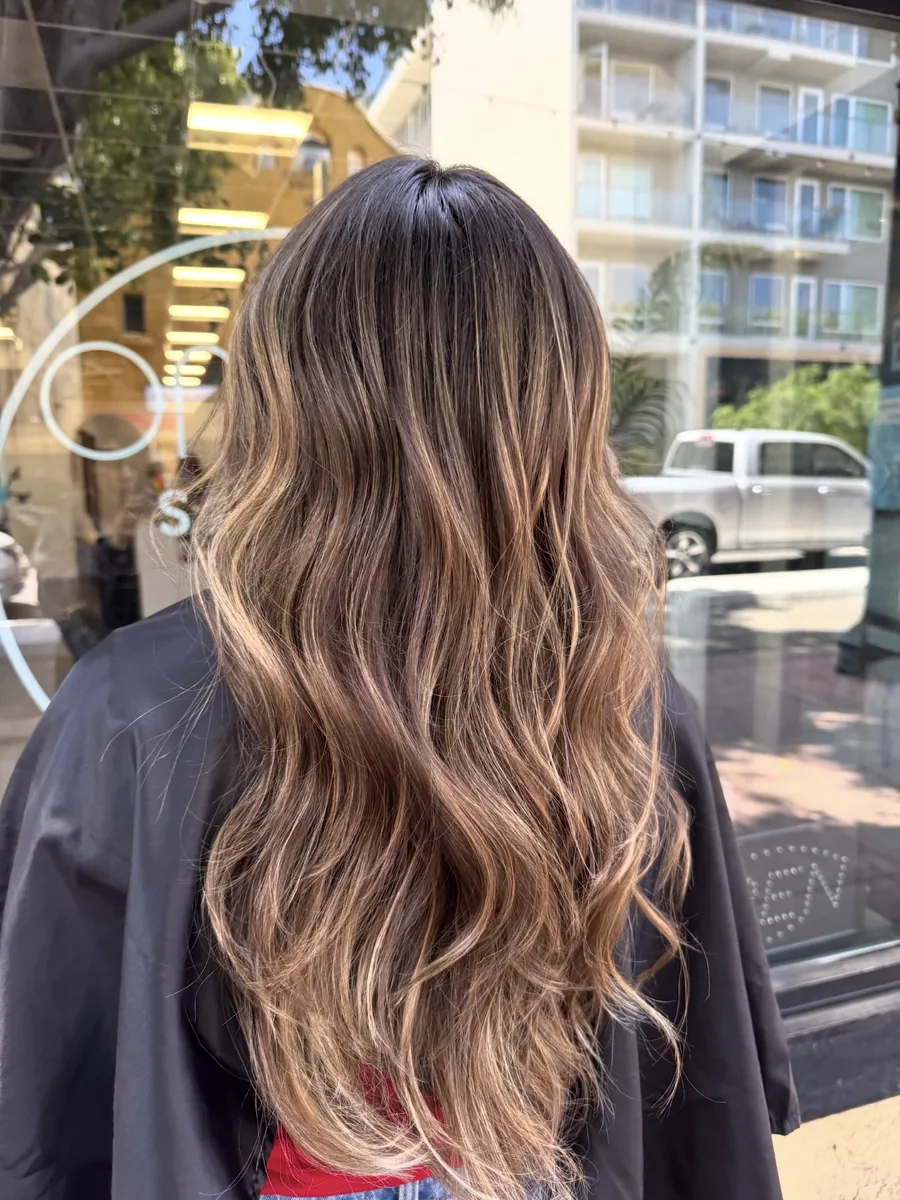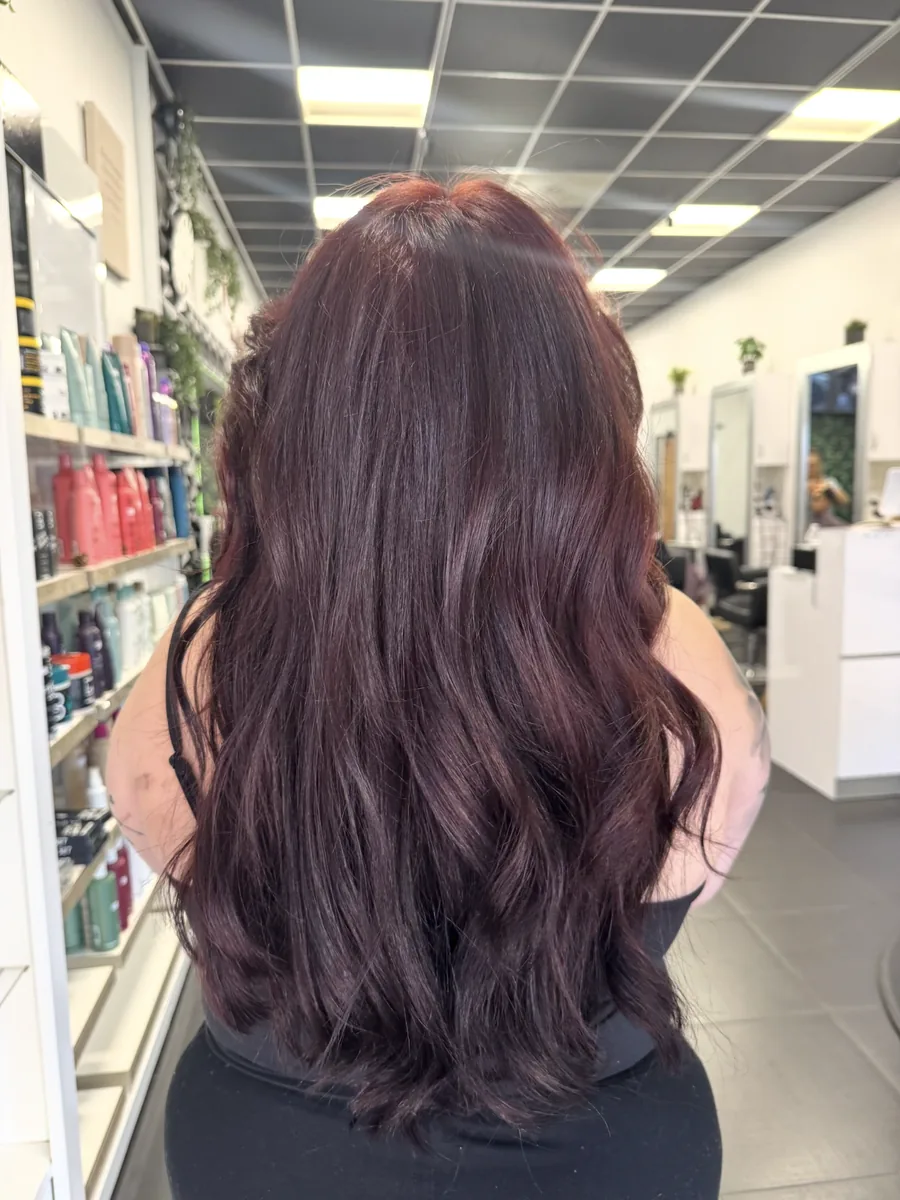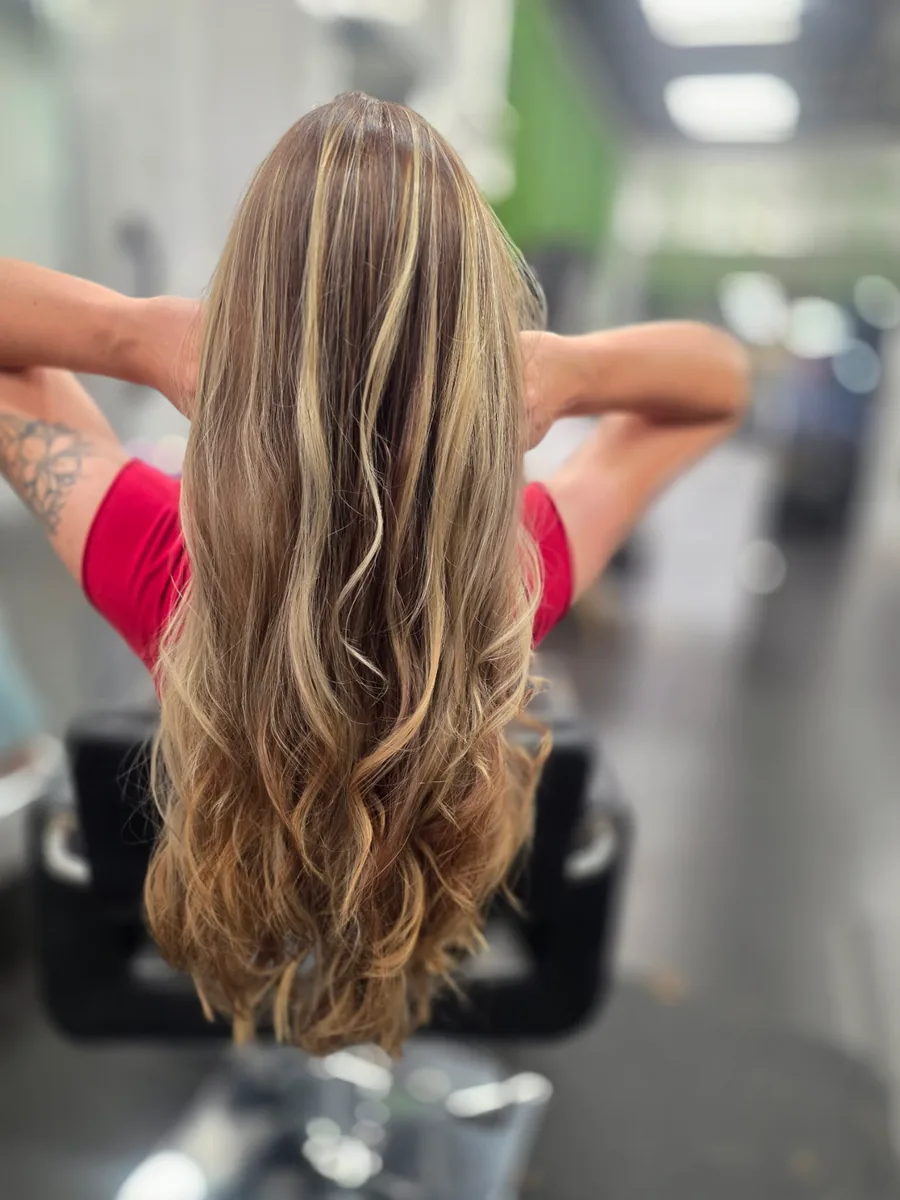

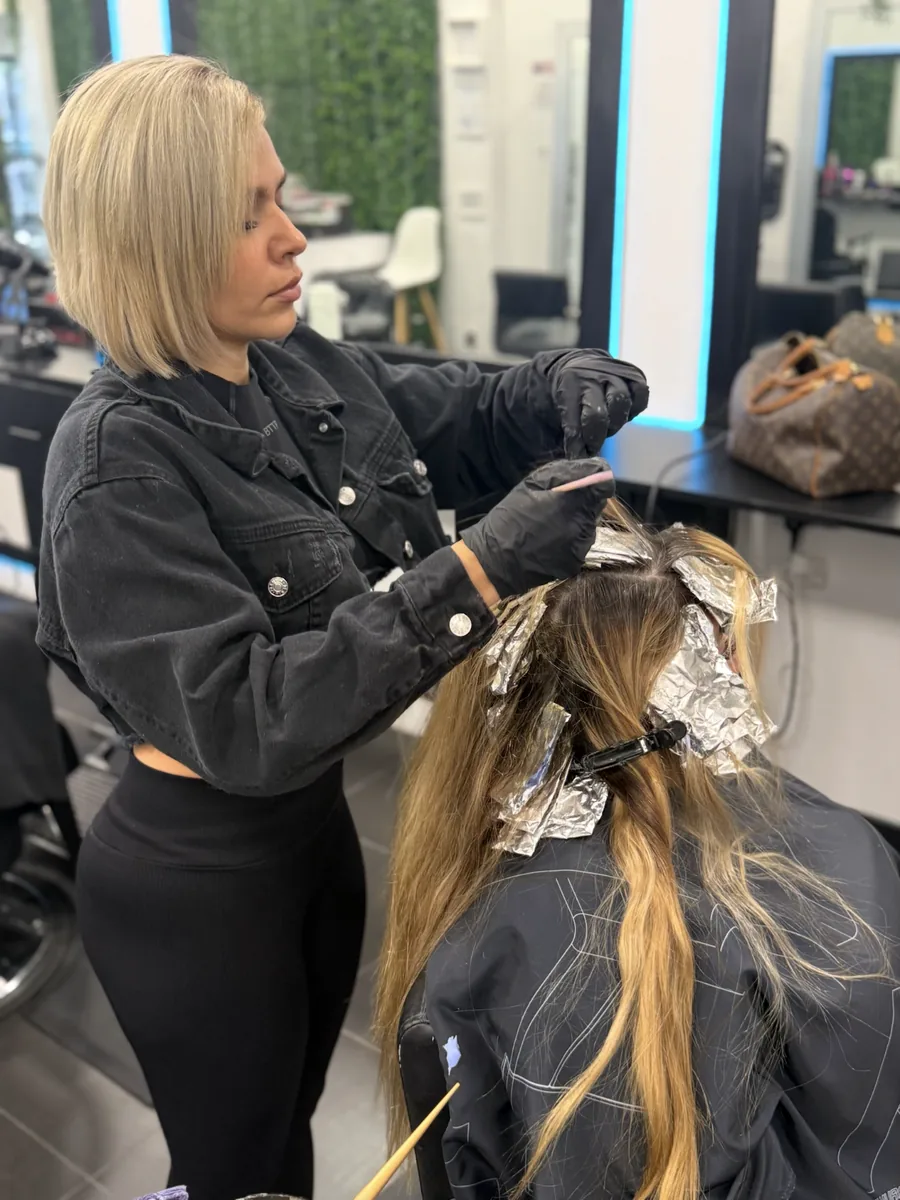
A color consultation is a planning conversation. It happens before any lightener or dye goes into the hair, and it is the best chance to align three things: the result you want, the hair you actually have, and the number of appointments it may take to get from one to the other. Coming prepared makes that conversation shorter and more honest.
Bring your history, not only a photo of the goal
Photos help. Bring a few of the finish you like—ideally on hair that resembles yours in texture and starting color—and a recent photo of your own hair in daylight. Then talk about history, which matters more than the inspiration picture:
- Box dye, henna, or metallic dyes, even from years ago, can affect how hair lifts or takes new color.
- The last professional color: what it was (highlights, balayage, all-over, a root touch-up) and roughly when.
- Any time the hair felt gummy, stretched, or broke after a service. That is information, not a confession.
- How often you wash, swim, work out, or use heat, because that is the life the new color has to survive.
- Gray hair, if you have it, and whether you want it fully covered.
If you can, arrive with your actual hair color visible: no heavy dry shampoo at the roots, no wet hair, and without a hat pressed on all afternoon. The stylist needs to see the true shade and the condition of the ends.
What “realistic in one visit” means
Hair has limits in a single day. Lifting dark or previously dyed hair several levels, or repairing bands of old color, can require more than one session so the fiber is not asked to do too much at once. Going darker is often more straightforward than going much lighter, but even a brunette change can need a gloss or a second visit if the hair is porous and grabs color unevenly. A careful stylist will say this before you start, not after the timer is already running.
Budget and time belong in this conversation in a general way: if you can only sit for a short appointment, or if you need a result before a specific date, say so. The stylist can then recommend a stepwise plan—perhaps a gloss and a haircut now, and a larger lightening visit later—rather than a rushed version of a service that needed a full afternoon. You do not need to recite a price list; you need to be clear about constraints.
Color correction, and how to leave with a plan
Color correction is not a vague upgrade. It is work aimed at a specific problem: hair that is too dark to lift evenly, leftover orange or green bands, a home color that will not match, or a bleach that was taken too far in one area and not far enough in another. The stylist should look at the hair in sections, maybe strand-test, and tell you what can be done today and what should wait. If the honest answer is “not in one visit,” that is a good consultation, not a failed one.
Leave with a plain-language plan: the technique (for example, a root touch-up and a toner; a balayage with a later gloss; a staged correction), the home care for the first week, and when to come back. If something is still unclear—how gray will be handled, whether your ends will be trimmed, whether a treatment should wait—ask before you book the service itself. The consultation has done its job when you understand the path, including the parts that will take patience.