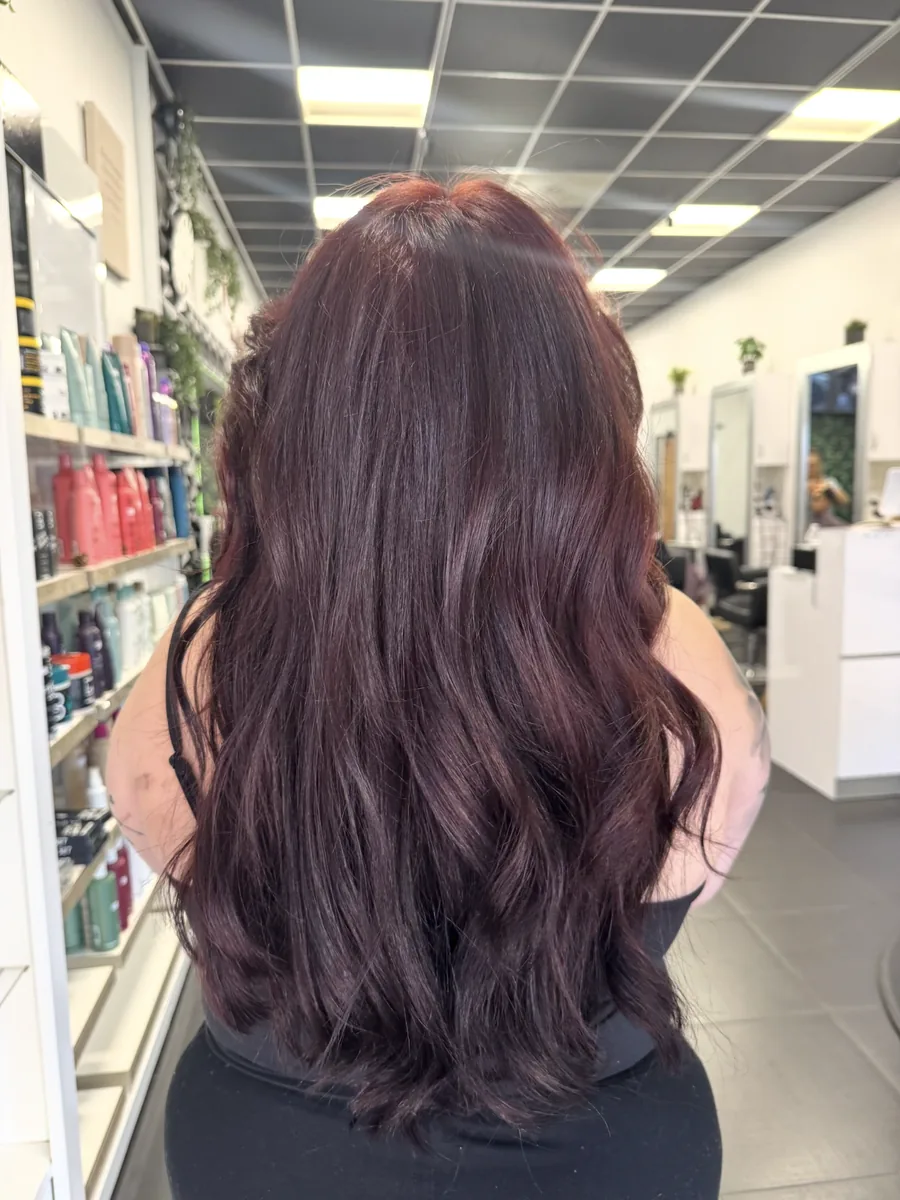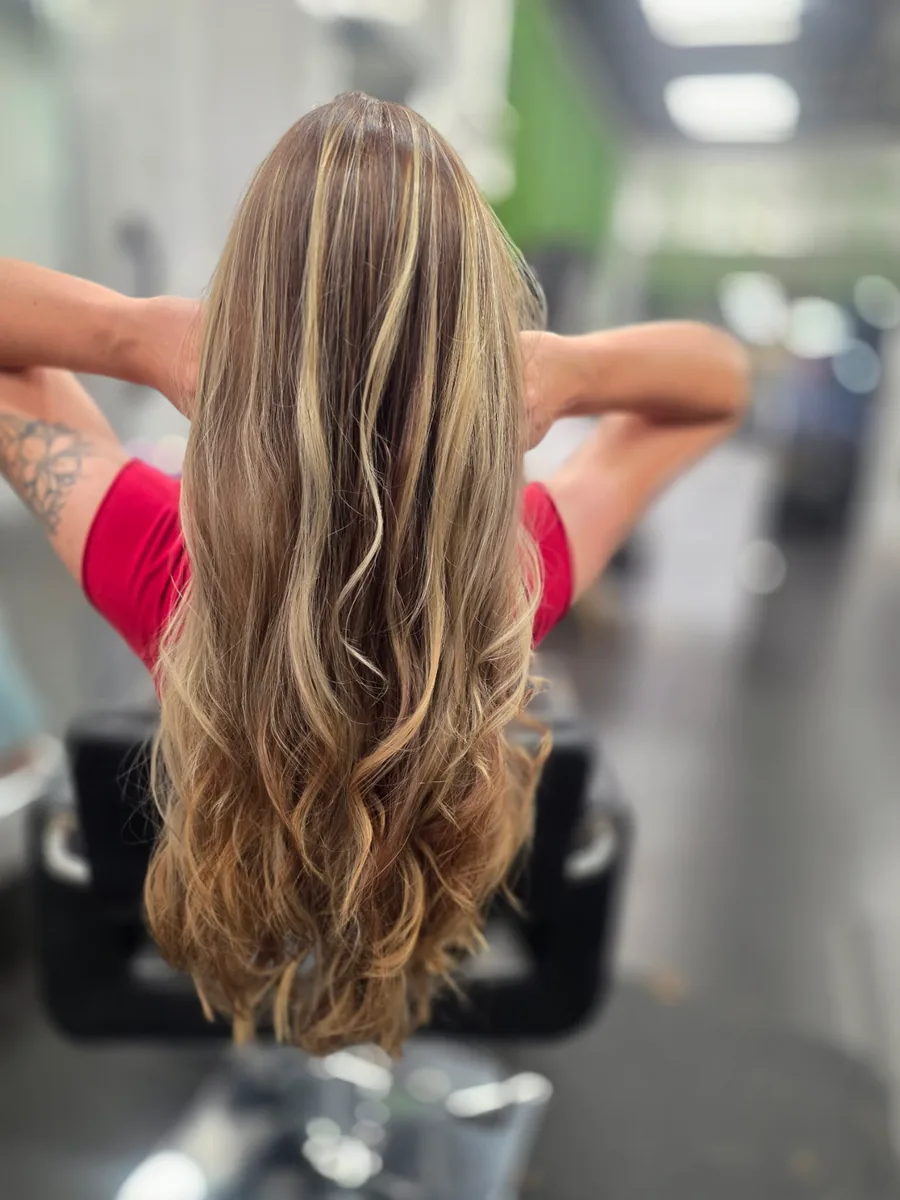

Highlights and balayage both lighten hair, but they are not the same service. Highlights typically isolate strands and lift them in a more even way, often from the root. Balayage is painted on by hand so the lightest color sits toward the ends and melts into your natural shade near the root. Ombré is a related look: a clearer two-tone shift from darker hair at the top to lighter hair at the ends.
How highlights work
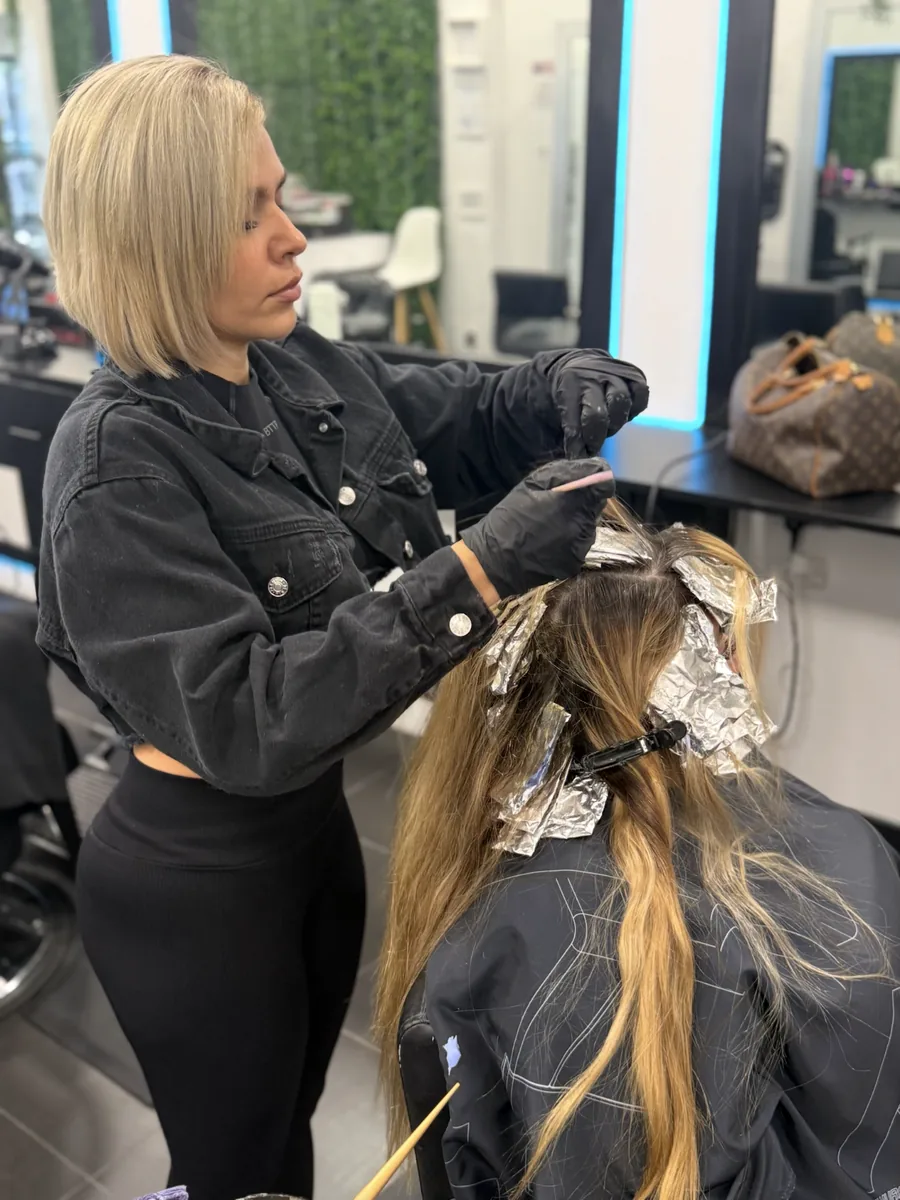
In a highlight service, the stylist weaves or slices thin sections of hair and usually places them in foil (a cap can also be used). The lightener sits in that closed environment, which helps the color lift in a controlled, even way from the start of the section to the ends. Full highlights involve the whole head. Partial highlights concentrate on the areas you see first: the hairline, the part, and often the crown.
Because many highlight placements start near the scalp, new growth appears as a distinct band of your natural color. That is not a flaw; it is how the technique is built. People who like a brighter, more uniform blonde from root to end, or who want a lot of contrast through the mid-lengths, often prefer this approach.
How balayage and ombré work
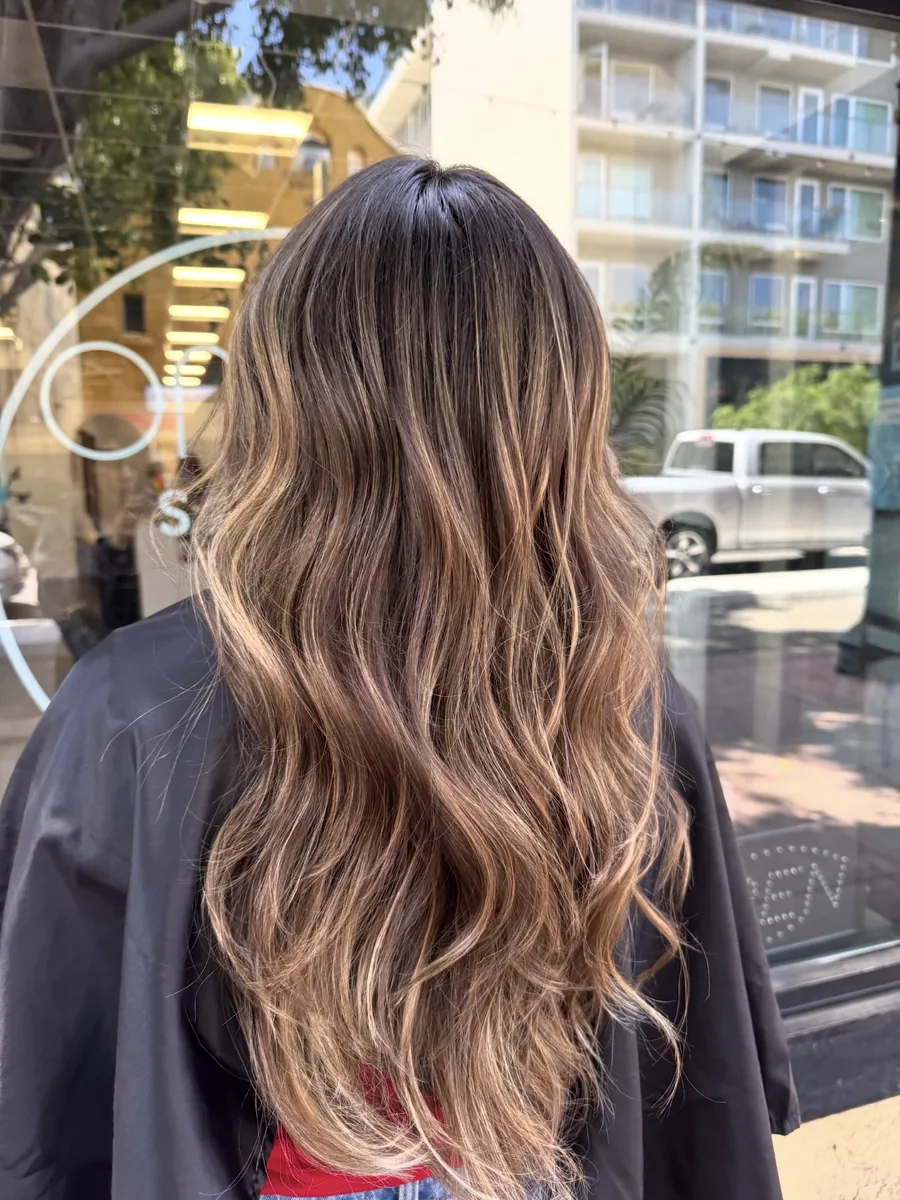
Balayage means “to sweep” in French. The stylist paints lightener onto the surface of the hair, typically saturating the ends more heavily and feathering the product as it moves up the strand. The hair is often left in the open air rather than sealed in foil, which gives a softer, less stripey result. Done well, it can look like hair that has lightened in the sun.
Ombré is about the overall gradient more than about individual painted strands. The top stays closer to your natural color (or is left alone), and the ends are clearly lighter, with a blend in between. Balayage can be used to create an ombré effect, and the two words sometimes get used interchangeably, but ombré describes the pattern you see, while balayage describes a painting method.
Grow-out, maintenance, and tone
No lightened hair stays exactly the same after you leave the chair. Sun, heat styling, swimming, and frequent washing all shift tone, often toward brassy or dull. A toner adjusts that tone (for example, neutralizing yellow or adding a beige or ashy finish). A clear gloss adds shine and a bit of seal without a strong color shift. Neither replaces a full highlight or balayage appointment, but both can stretch the time between bigger services and keep the color looking intentional.
When the lightened pieces start at the root, a root touch-up or a bleach root touch-up may be the right maintenance visit. Balayage usually needs less frequent root work and more attention to the ends and overall tone. The right interval depends on how fast your hair grows, how light you went, and how obvious you mind the grow-out looking.
Which one fits your hair and your week
Choose based on the result you want and the upkeep you will actually do, not on which word is more popular.
- Choose traditional highlights if you want even brightness from the root, a lot of dimension through the whole head, or a cooler, more “done” blonde that you are willing to retouch on a schedule.
- Choose balayage if you want a softer grow-out, a sunlit effect, and less of a hard line at the scalp. It can still be very light at the ends; soft does not have to mean subtle.
- Choose ombré if you specifically want that darker-to-lighter gradient and are comfortable with a more obvious two-tone shape.
Hair history matters as much as taste. Hair that has been boxed-color, previously bleached, or is uneven in porosity will not lift the same way from roots to ends. That is a reason to start with a consultation, especially if you are asking for a big change. Bring photos of the finish you like (and photos of your hair now, in daylight), and say how often you usually style and wash it. A good color plan is one you can live with six weeks later, not only on the day you leave the salon.