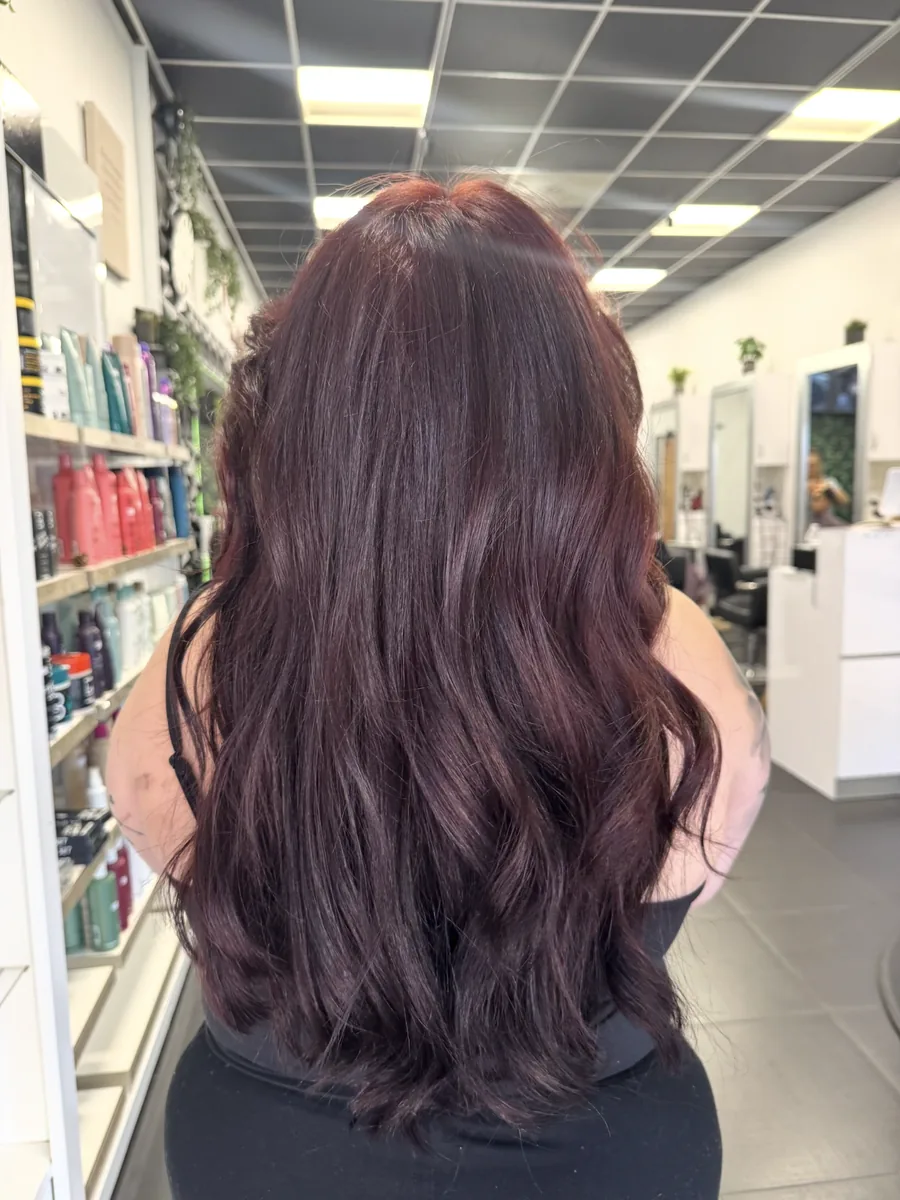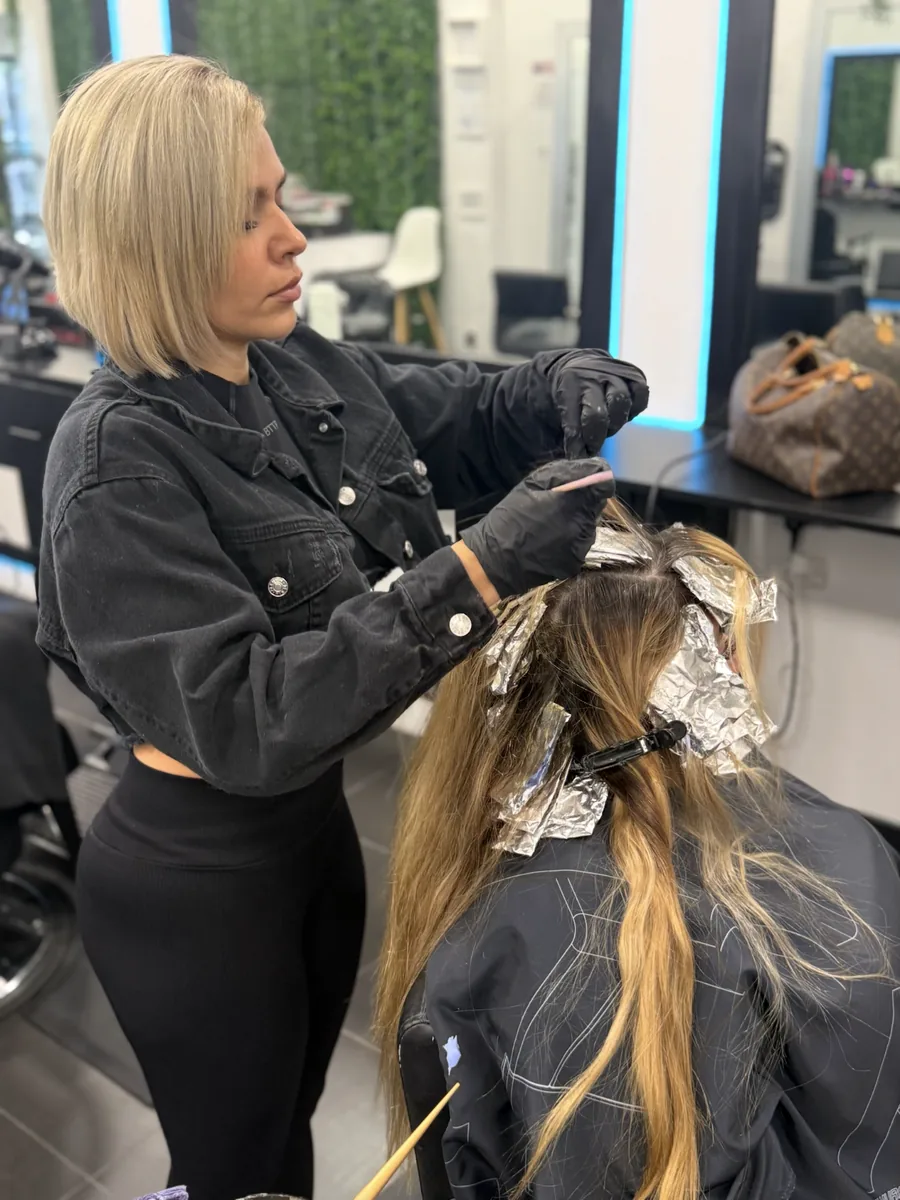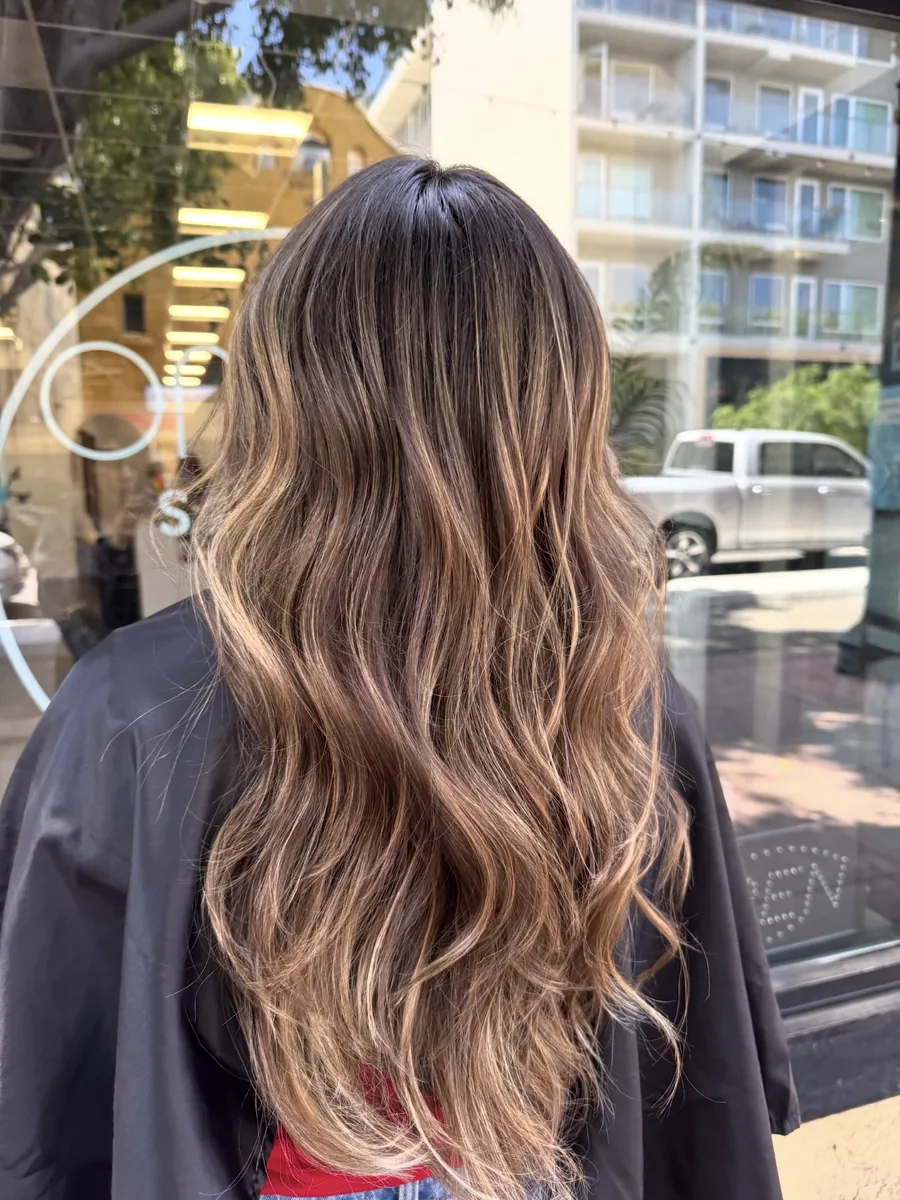

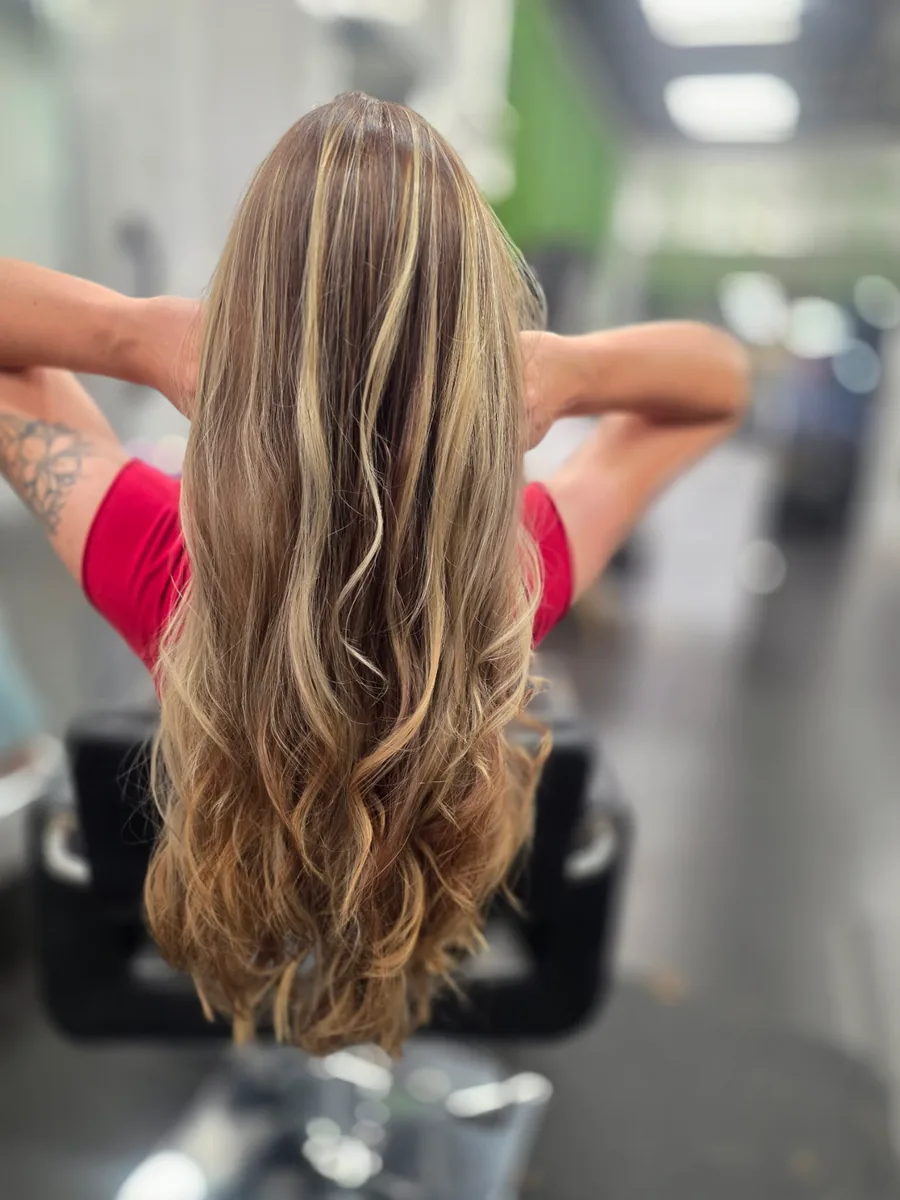
Covering gray is a practical color problem as much as a personal one. Full coverage—usually a root touch-up, and sometimes an all-over color if the lengths need it—aims to make gray hair match the rest of your color as completely as possible. The result is even and polished on day one. As your hair grows, a line of new gray (and natural color) appears at the scalp. How soon that bothers you depends on how dark the color is, how much gray you have, and how you wear your part.
Root touch-up or all-over color
A standard root color touch-up applies color to new growth so it matches the rest of the hair. That is the usual maintenance service once the lengths already look the way you want. All-over color is a full application, used when the existing color needs to be changed or refreshed from roots through ends, not just at the scalp. If the lengths have faded, gone brassy, or no longer match the root formula, a root-only visit will leave a mismatch. A stylist can tell which of those situations you are in by looking at the hair, not only at the calendar.
People who want a consistent, finished look and are comfortable coming in on a schedule often prefer this approach. The schedule is personal: some people notice new growth in three weeks; others are comfortable closer to six. Darker color and a clean part usually show the line sooner.
Why gray hair can be resistant
Gray hair can be coarser, and it may not take pigment the same way the rest of the hair does. A stylist accounts for that in the formula. This is one reason box color at home sometimes leaves gray looking like a different shade than the rest of the head, or leaves a band that later has to be corrected.
If your color has gone uneven, too dark, too light, or banded from past work, that is usually a color-correction conversation, not a standard touch-up. Correction can take more than one visit. It is better to plan that honestly than to ask a single appointment to undo years of color history.
Grow-out, and how to keep the result looking even
Full coverage looks its best on a rhythm. Ask yourself a few practical questions before you book:
- How do I want to look in week three? If a visible root line will bother you, plan the next visit before that line becomes the first thing you see.
- How much gray do I have, and where? A few hairs at the temples are a different plan than a mostly gray front hairline.
- Do the lengths still match? If they have faded or changed tone, a root touch-up alone will not bring the whole head back.
Highlights or balayage are sometimes used alongside full coverage to add dimension so the color does not look flat. A gloss or toner can also refresh tone between larger color visits. A consultation is the place to look at all of that on your actual head, in the lighting you will live with, and to leave with a plain-language plan for the first visit and the ones after.