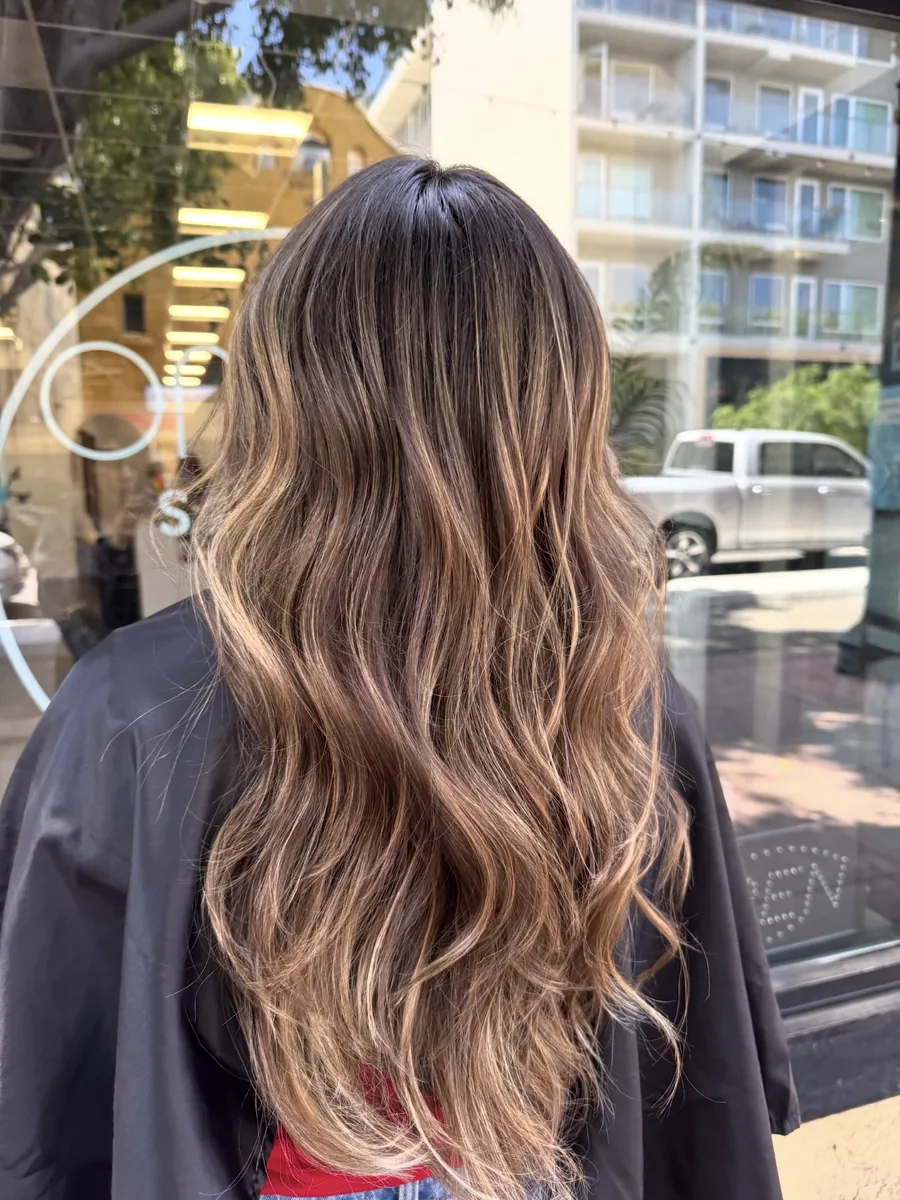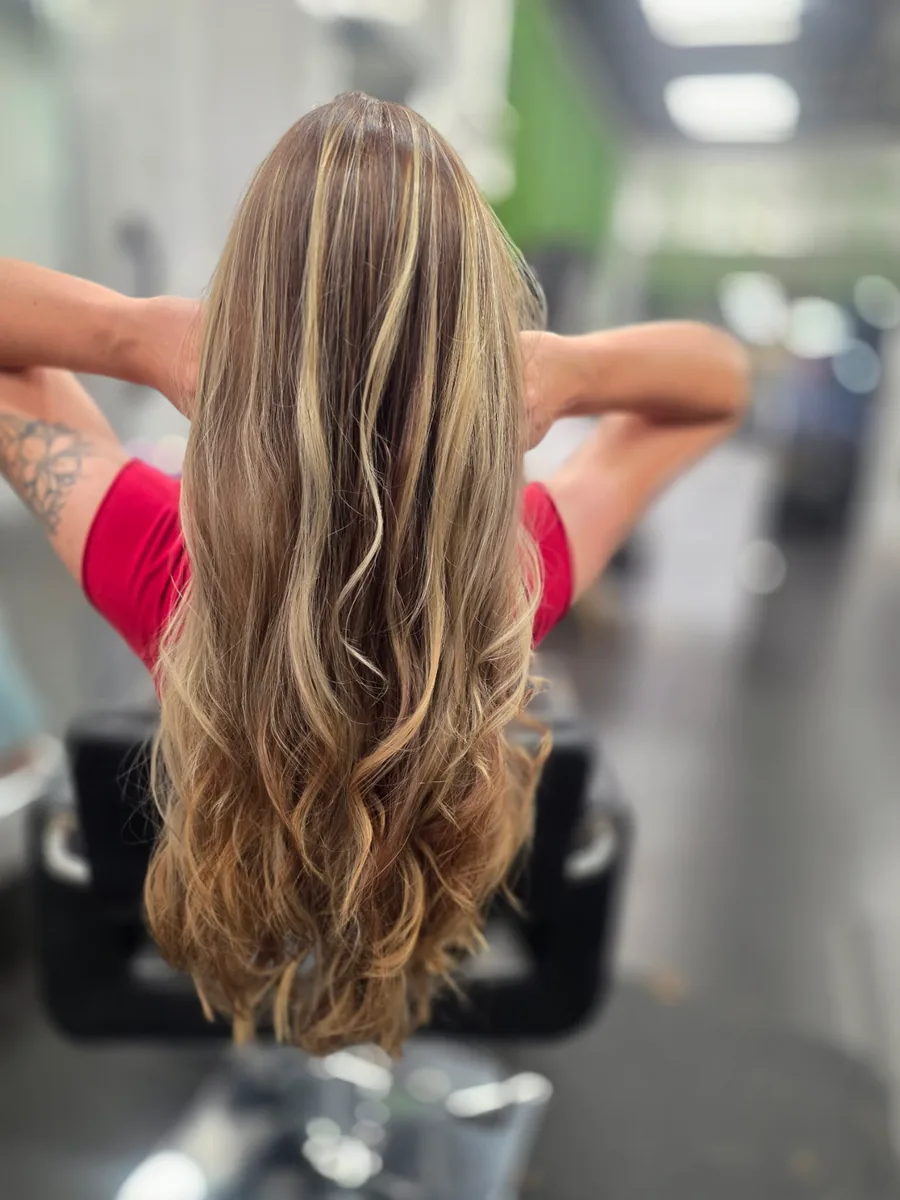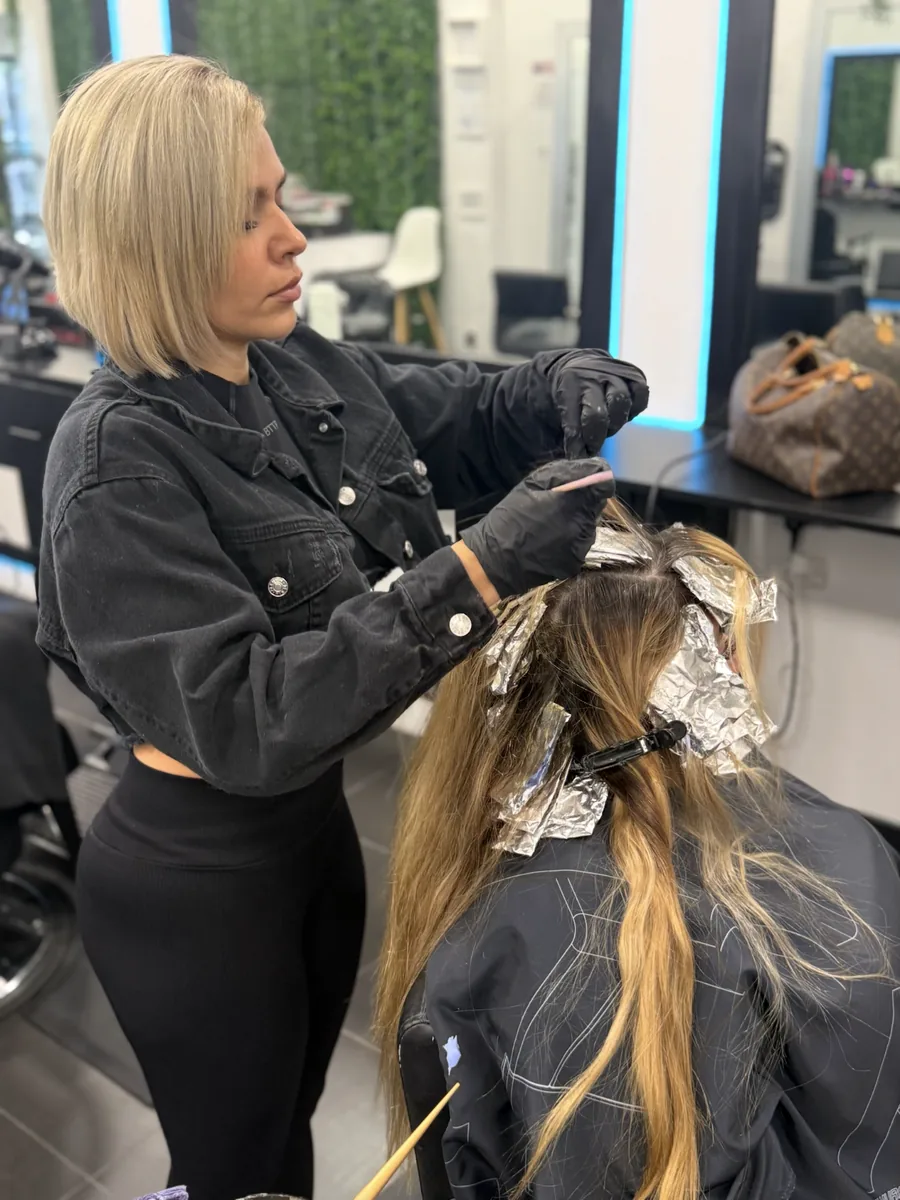

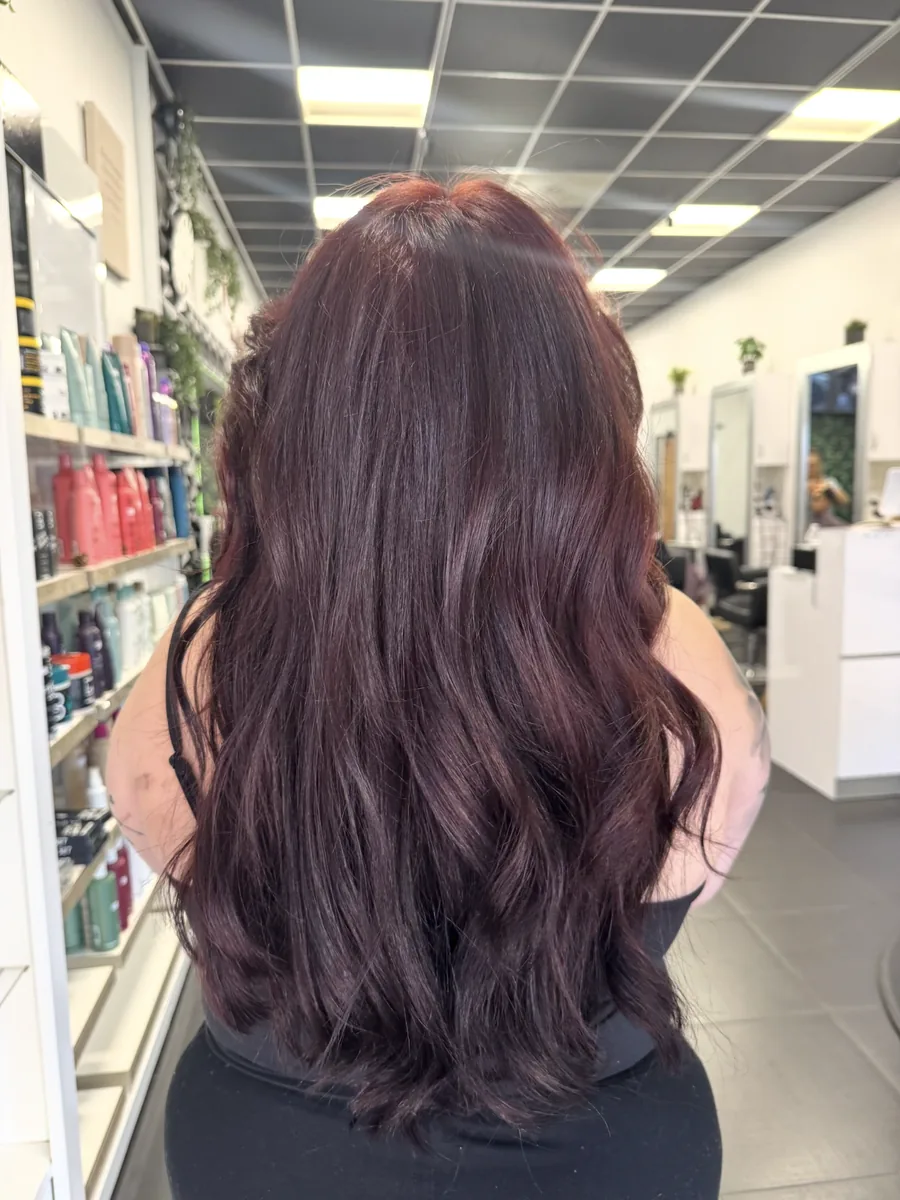
Hair color is at its most precise on the day it is applied. After that, washing, sun, heat, and new growth all start to change it. Maintenance is less about buying a cabinet of products and more about understanding three separate jobs: protecting what is already there, refreshing tone and shine, and deciding when the root needs actual color again.
Why salon color shifts
Permanent and lightened color lives inside the hair fiber. As the cuticle opens and closes—with hot water, shampoo, chlorine, salt water, and heat tools—some of that color washes or fades, and the remaining pigment can look warmer or duller than it did in the salon. Lightened hair shows this quickly because there is less natural pigment left to mask the change. Meanwhile, hair keeps growing, so a band of natural color (and gray, if you have it) appears at the scalp.
Those are different problems. Faded mid-lengths often need tone or gloss. A growing-out root needs a root service. Treating them as the same appointment can over-process hair that only needed a shine refresh, or leave a harsh root line on hair that needed new color.
What you can do at home
You do not need a complicated routine. A few habits make a visible difference:
- Wash less often, and cooler. Every shampoo removes some color. Lukewarm water is gentler than a hot shower on the cuticle. Dry shampoo can stretch a day, but it should be washed out regularly so it does not build up at the scalp.
- Use a color-safe cleanser. A gentle, sulfate-free shampoo made for colored hair is usually enough. Clarifying shampoos have a place when product or hard-water buildup is the issue, but they are not an everyday wash for freshly colored hair.
- Protect from heat and sun. A heat protectant before a blow-dryer or iron, and a hat or UV-protecting leave-in in strong San Diego sun, both slow fading and dryness at the ends.
- Be careful in the pool and the ocean. Water, salt, and chlorine can shift blonde and highlighted hair especially. Wet the hair with clean water before you swim, rinse after, and do not let chlorinated water dry on lightened hair.
Toner, clear gloss, and when to come back
A toner is a sheer tint. It is how a stylist steers blonde or highlighted hair away from unwanted yellow or orange, or gives brown hair a cooler or richer finish. It fades faster than the underlying lightening or permanent color, which is why a toner appointment can bring a color back to life without starting from scratch. A toner add-on is simply that same idea attached to another service.
A clear gloss is mainly shine and condition: it smooths the cuticle so light bounces more evenly. If your color is still the right shade but looks tired or rough, a clear gloss may be enough. If the shade itself has drifted, you want toner or a color service, not only gloss.
Root touch-up, bleach roots, and all-over color
A standard root touch-up applies color to new growth so it matches the rest of the hair. A bleach root touch-up is for hair that was lightened at the scalp—highlights or an all-over bleach—and needs that new growth lifted again, which is a different chemical process and should be treated with more care. All-over color is a full application, used when the existing color needs to be changed or refreshed from roots through ends, not just at the scalp.
Gray hair can be covered with a root color touch-up or, when the lengths need it, an all-over color. The result is even on day one. As the hair grows, a line of new gray appears at the scalp, which is why people who want a solid, finished look often come back on a regular schedule. How soon that line bothers you depends on how dark the color is, how much gray you have, and how you wear your part.
If your color has gone uneven, too dark, too light, or banded from past work, that is usually a color-correction conversation, not a standard touch-up. Correction can take more than one visit. It is better to plan that honestly than to ask a single appointment to undo years of color history.