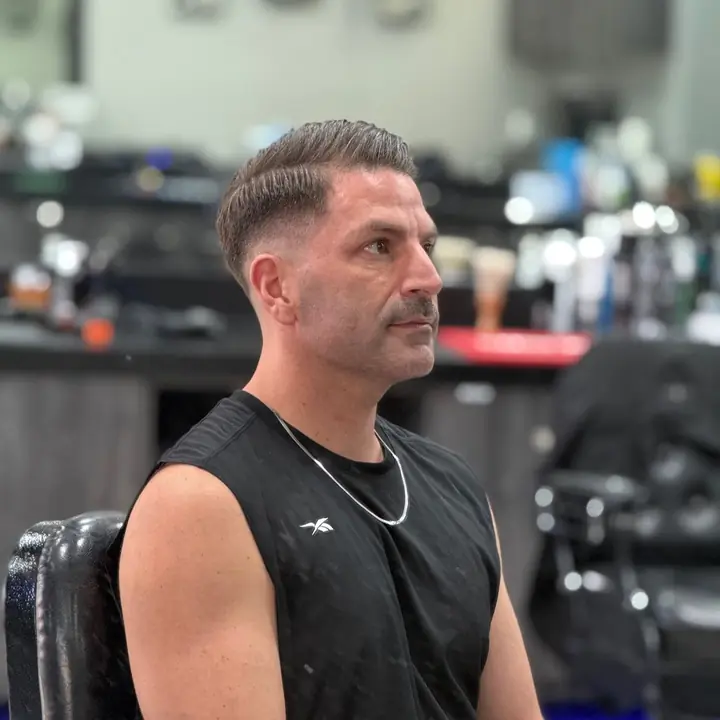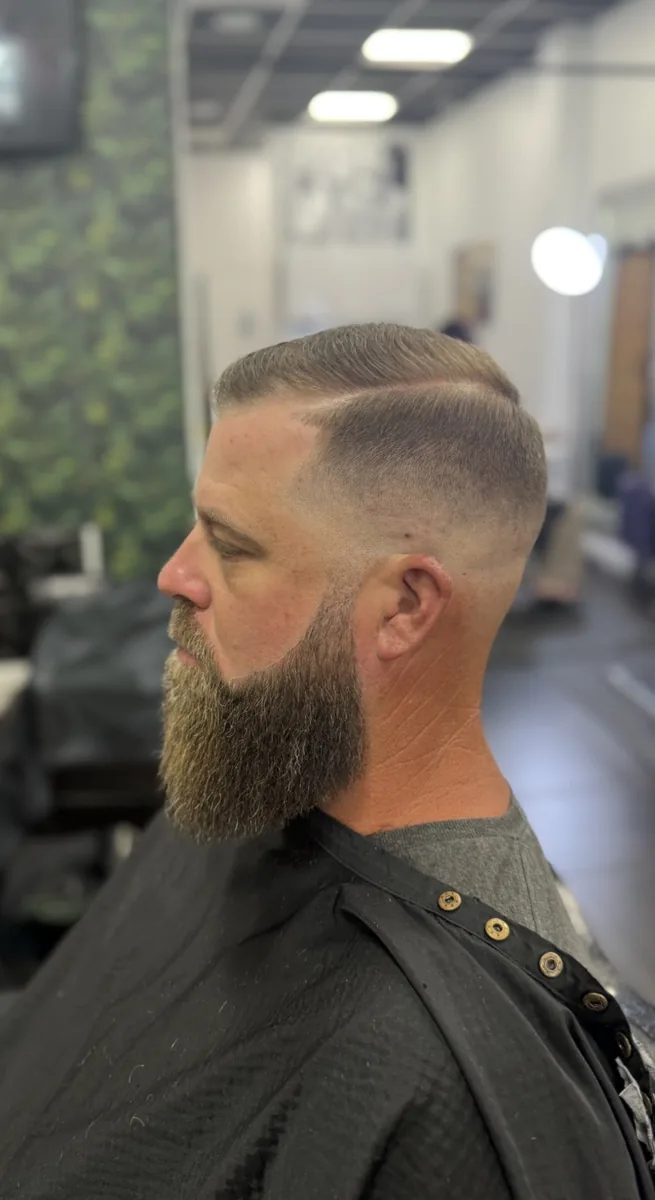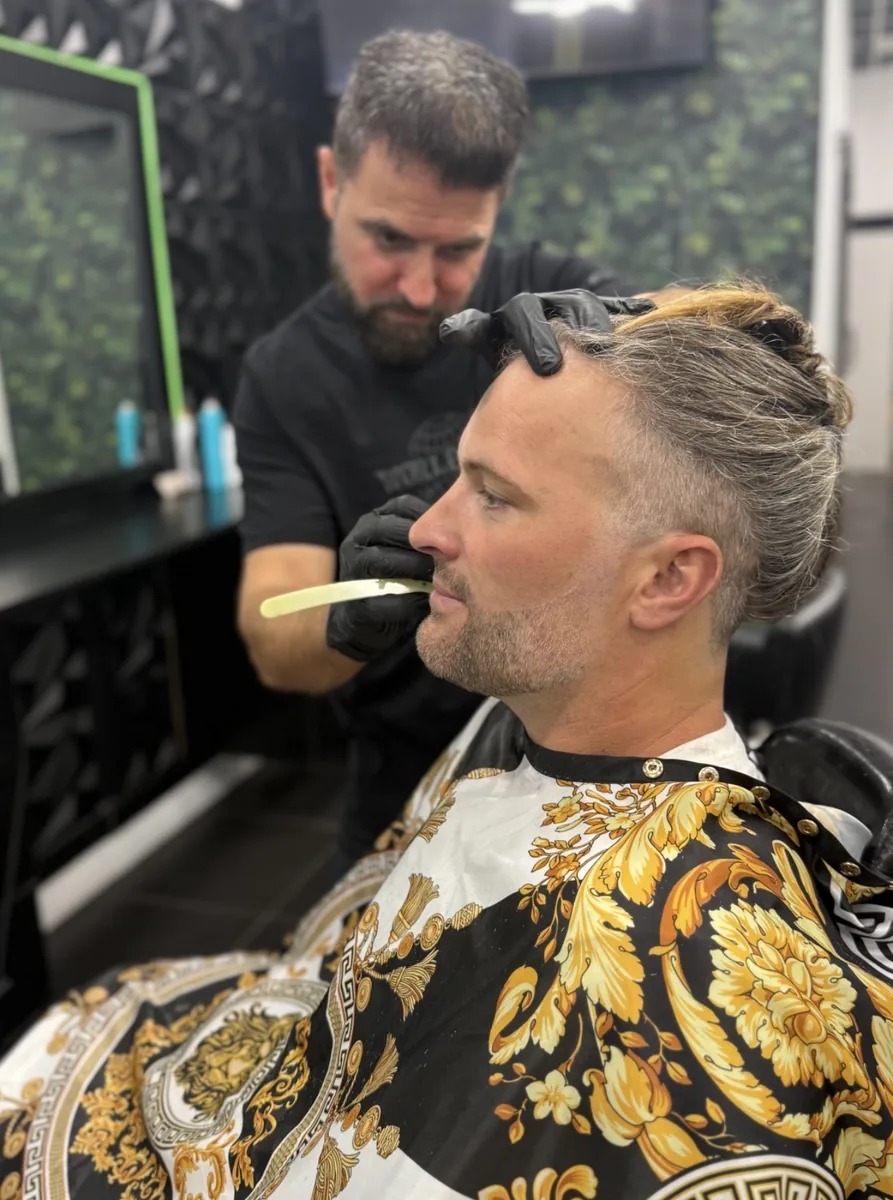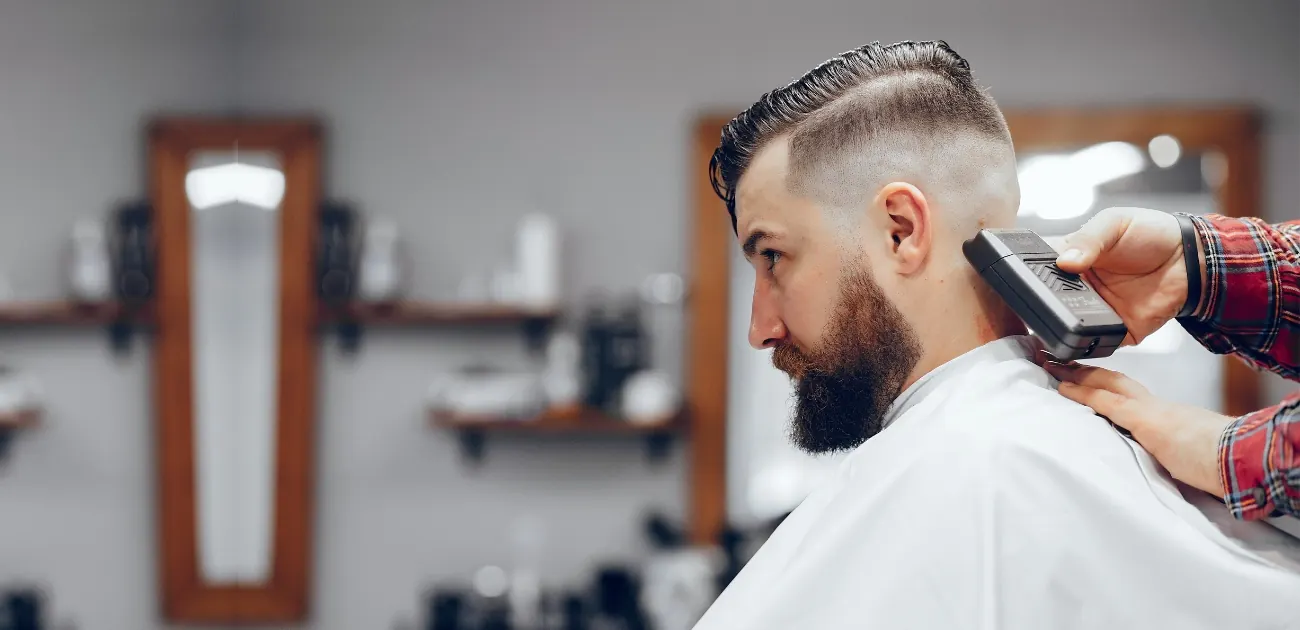

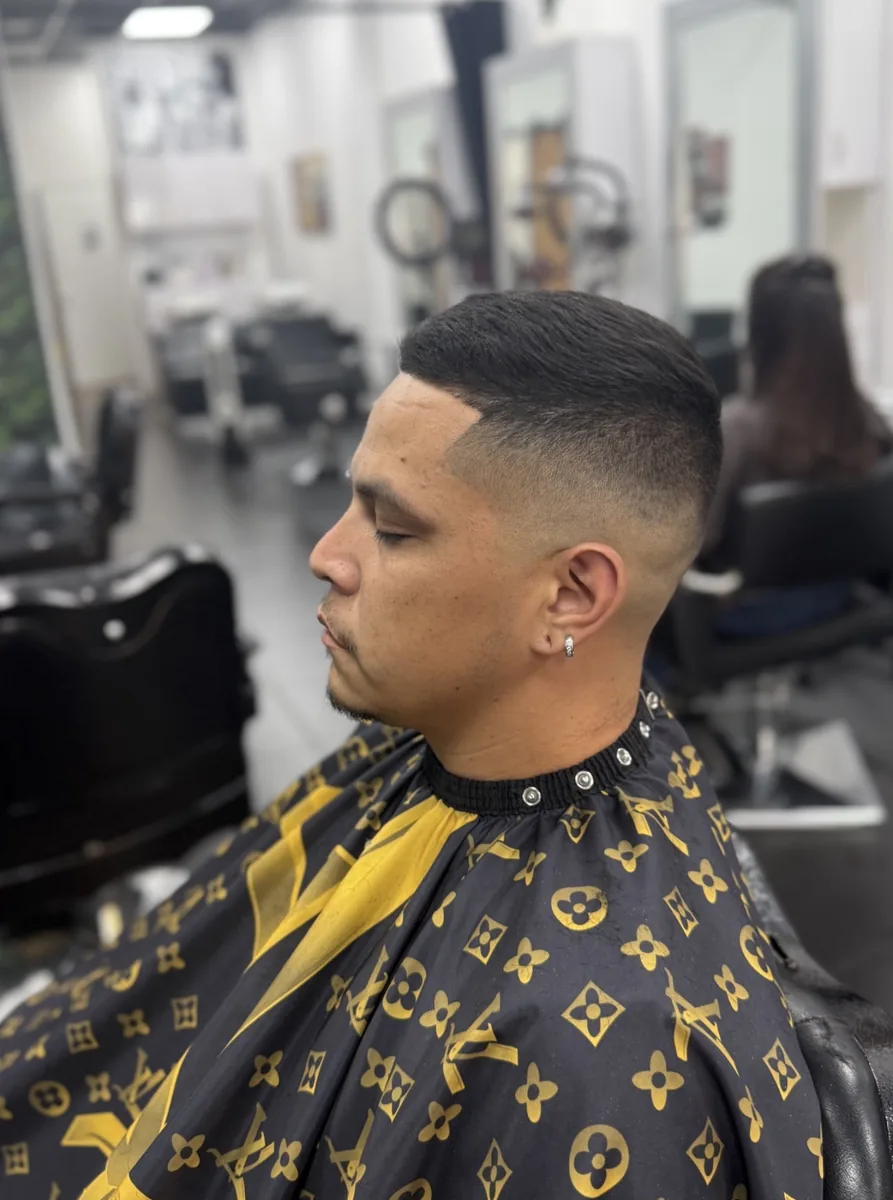
A fade is a haircut in which the hair on the sides and back gets progressively shorter as it moves down the head, blending into skin or into a very short length. The “height” of the fade—low, mid, or high—is simply where that tightest, shortest zone sits. A taper is related, but it usually keeps more weight in the sides and focuses the shortening on the edges: the sideburns, the area around the ears, and the neckline.
Knowing those words helps you talk to a barber. They are not a substitute for a photo of a cut you like, or for saying how you style your hair on a normal Tuesday.
Low, mid, and high fades
A low fade starts its tightest blend low on the head, near the ears and the nape. The upper sides stay closer to the length on top, so the overall shape can look conservative or only quietly modern. It is often a good starting point if you want a clean finish without a lot of scalp showing.
A mid fade begins roughly at temple height, around the middle of the sides. It is the most common request for a reason: there is a clear contrast between the top and the sides, but the fade does not climb all the way to the crown.
A high fade starts higher, often above the temples, so more of the side of the head is short. It makes the top—whether that is a crop, a pompadour, curls, or a hard part—stand out more. It also needs more confident upkeep, because there is more short hair in view.
Within any of those heights, a barber can take the shortest point to skin (sometimes called a skin or bald fade) or leave a shadow of hair. “To the skin” and “leave a little weight” are useful phrases. So is telling the barber whether you want a sharp lineup at the hairline or a more natural front.
Tapers, and what to say in the chair
If you like a classic shape—more hair on the sides, a tidy neckline, no dramatic drop to scalp—ask for a taper and show a photo. If you want that distinct blend into very short hair, ask for a fade and name the height. Many cuts sit in between, and a good barber will show you with a comb or a clipper guard before committing.
A few details make the consultation faster:
- How you wear the top: fingers only, a comb, product, or a hat most days.
- How tight you want the sides relative to the photo you brought. Photos lie a little; your hair density and skull shape will not match the model’s exactly.
- Your neckline preference: squared, rounded, or faded out so there is no hard line (a “blocked” neckline looks crisp the first week and can grow out as a shelf).
- Whether the beard or mustache should be connected to the fade, left alone, or shaped in the same visit.
Keeping a fade looking intentional
Short blends grow out in a predictable way: the crispest week is the first one. A mid or high skin fade will lose its edge sooner than a low taper. That is not the cut “failing.” It is hair doing what hair does. If you only come in once a month, say so up front so the barber can leave a little more length in the shortest area, or recommend a taper that still looks deliberate in week three.
At home, you do not need to recut the fade yourself. Comb or brush the top the way you showed the barber, use a small amount of product if that is your style, and keep the neck and hairline clean if you already know how to do that safely. If you are unsure, leave the edges for the next visit. Uneven home clipper work is much harder to correct than a slightly grown-out fade.
Coming from a nearby neighborhood
Omnia’s chair sits on Fifth Avenue in Hillcrest, which borders Mission Hills, Bankers Hill, University Heights, and North Park. If you are coming from any of those neighborhoods for a fade, a beard trim, or a regular haircut, you are looking at a short trip into a walkable commercial street, not a drive across the city. Build a few extra minutes for parking, especially on weekends.