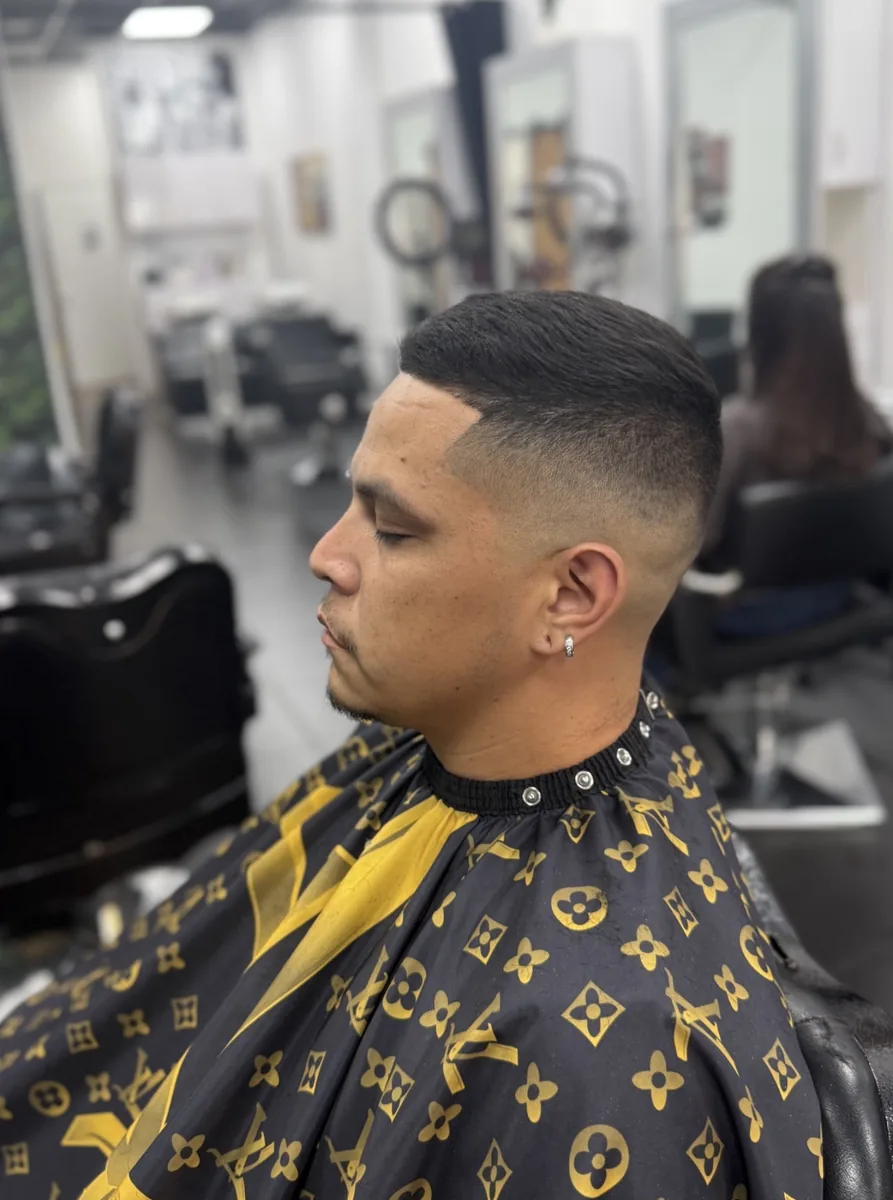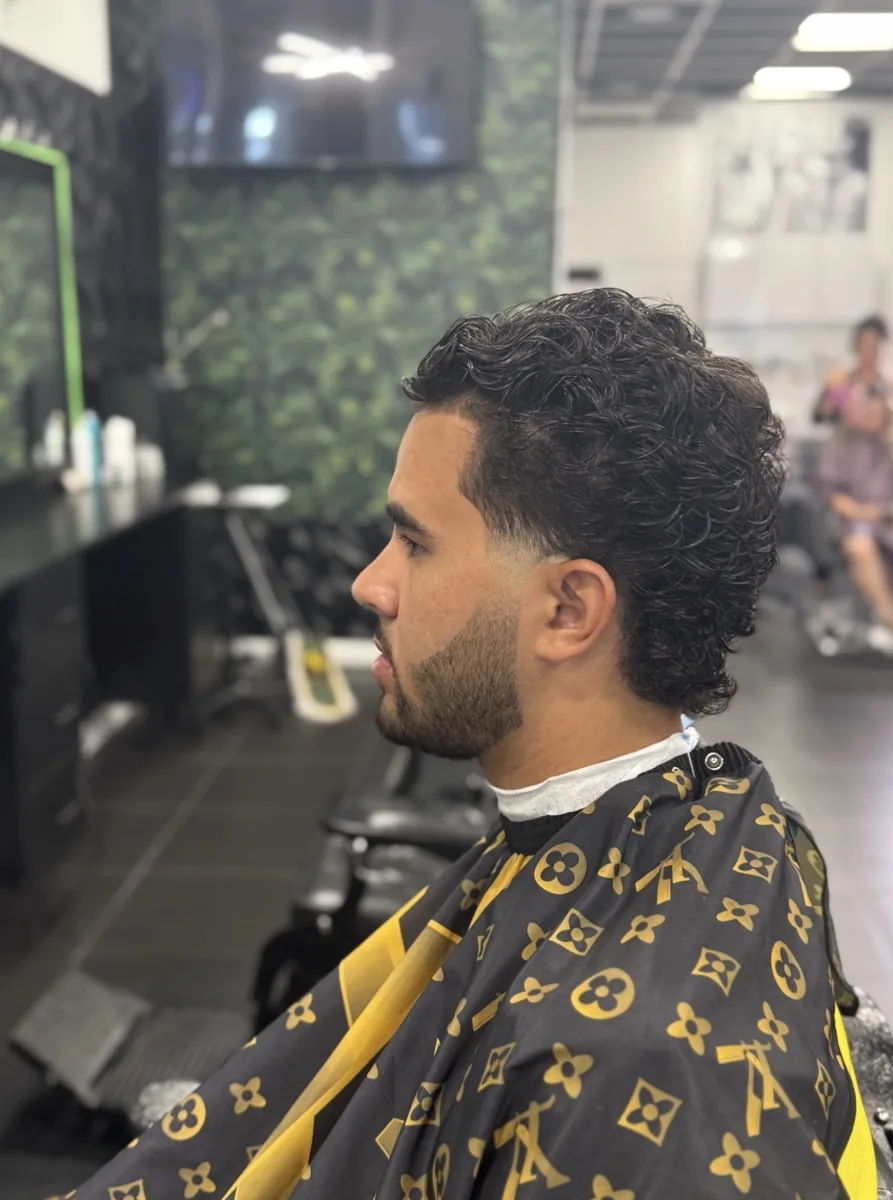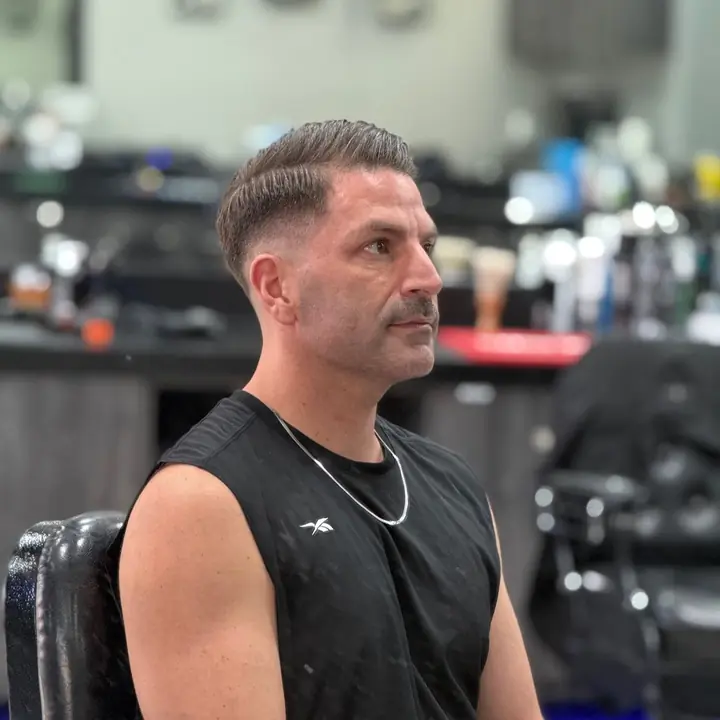


There is no single right interval for a barber haircut. A tight fade and a longer classic cut grow out on different clocks. The useful question is not “what is the rule?” It is “how short is the shortest part of my haircut, and how do I want it to look in the last few days before I come back?”
Fades grow out faster than longer cuts
A fade is shortest at the bottom of the sides and neck. When that area is taken close to the skin, new growth is visible quickly—often within a week or two—because there is not much hair left to hide it. Mid and high fades, and skin fades especially, are the cuts people usually want cleaned up most often. That is not because the first haircut failed. It is because a crisp blend is a short-lived shape by design.
A low fade, or a taper that keeps more weight in the sides and only tightens the edges, has a longer “intentional” period. The neckline and the area around the ears still grow out, but the overall shape changes more slowly. If you like a tidy outline but only sit in the chair once a month, say that before the clippers start. The barber can leave a little more length at the shortest point, or recommend a taper, so week three still looks like a haircut and not like a grown-out skin fade.
The top, the beard, and your actual week
How often you cut the top is a separate decision. Some people want the sides fresh and are happy to let the top grow. Others want the whole shape held in place. Tell the barber which you mean. If you also wear a beard, a haircut-and-beard visit keeps the sideburns, cheek line, and neckline on the same schedule, which is often why those combined services exist.
Your calendar matters as much as your taste. If work and travel mean you come in every five or six weeks, a very tight fade will spend half its life looking softer than the photo you brought. That can still be fine. It should just be a choice, not a surprise. If you can come in every two weeks and want the sharpest possible lineup, the barber can cut to that.
How to talk about interval in the chair
A useful first visit includes this sentence: “I usually come back every ___ weeks.” A good barber will adjust. You can also ask how the neckline will look as it grows—a blocked, squared neckline is crisp on day one and can grow into a shelf; a faded or rounded neckline eases more gradually.
Between visits, you do not need to recut the fade at home. Comb or style the top the way you showed the barber, and leave the blend alone if you are not practiced with clippers. An uneven home cleanup is harder to repair than a slightly grown-out professional cut. If a special event falls mid-cycle and you want the haircut sharper, a shorter cleanup visit is a reasonable request; bring a photo of how it looked right after the last cut.
People coming from nearby neighborhoods—North Park, University Heights, Mission Hills, Bankers Hill—often try to combine a haircut with other errands on Fifth Avenue. That works well when the interval is planned. Book the chair first, then give yourself a little time for parking in Hillcrest, rather than squeezing a fade into a gap that may run short.